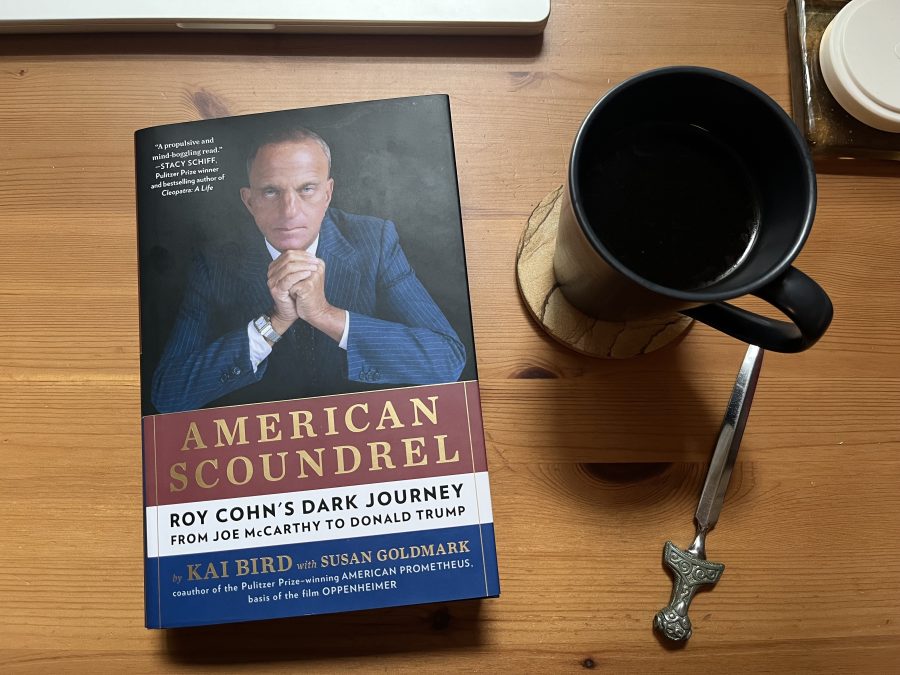
On its website today, the New York Times did something remarkable. In an age of declining literacy rates, spiralling attention deficits, and disappearing literary coverage, the paper of record posted a thirty-six minute video featuring three commentators discussing a book. Part of the NYT‘s ongoing Opinions podcast series, the video featured columnists Carlos Lozada and Michelle Cottle, along with historian Nicole Hemmer, talking about American Scoundrel: Roy Cohn’s Dark Journey from Joe McCarthy to Donald Trump.
The book, by Pulitzer Prize winner Kai Bird with Susan Goldmark, has already received quite a bit of attention, including a laudatory review in the NYT and a profile of Bird in the Guardian. It’s not hard to understand why the volume is so popular in journalistic circles. In addition to being a serious biography of a consequential figure in American 20th century history, it also describes in detail its subject’s influence on a young Donald Trump. The two met in 1973 and Cohn went on to school the future U.S. president in the dark arts of media manipulation; aggressive litigiousness; the practice of denial, deferral, and deflection; and the creation of false or flattering narratives. A mob lawyer and former counsel to far-right communist hunter Joe McCarthy, Cohn’s influence on Trump was incalculable and we are all living with the malign results today.
So it is obvious the work has currency that gets it off the book pages, something prized by publicists and marketers for its utility in expanding the reach of potential readers. And while the book may be of greater interest for its political relevance than its literary merit, it is nonetheless cheering to encounter three people in a major legacy media organization speaking at length about its contents and importance. It is exactly the kind of high-profile coverage in a major news outlet many people claim to be yearning for.
Nor was it the first time this month the NYT has been responsible for giving a book a prominent boost under its banner. That would be in-house critic Dwight Garner’s viral review of The Disappearers, the new novel by Marlon James. Already longlisted for the 2026 Booker Prize, the novel benefited enormously from Garner’s effusive endorsement, in which he called the book “a masterpiece, the novel of the decade and possibly of the century thus far.”
“Rarely are reviews – a form of book coverage already on the brink of extinction and often hidden behind paywalls – guaranteed to influence sales, even those published in the paper of record,” writes Jasmine Vojdani in Book Gossip, the NYT‘s literary and publishing newsletter. This would appear to be an exception; Vojdani notes that the book sold out on Amazon one day after its publication on September 1, which was itself a day after Garner’s review appeared.
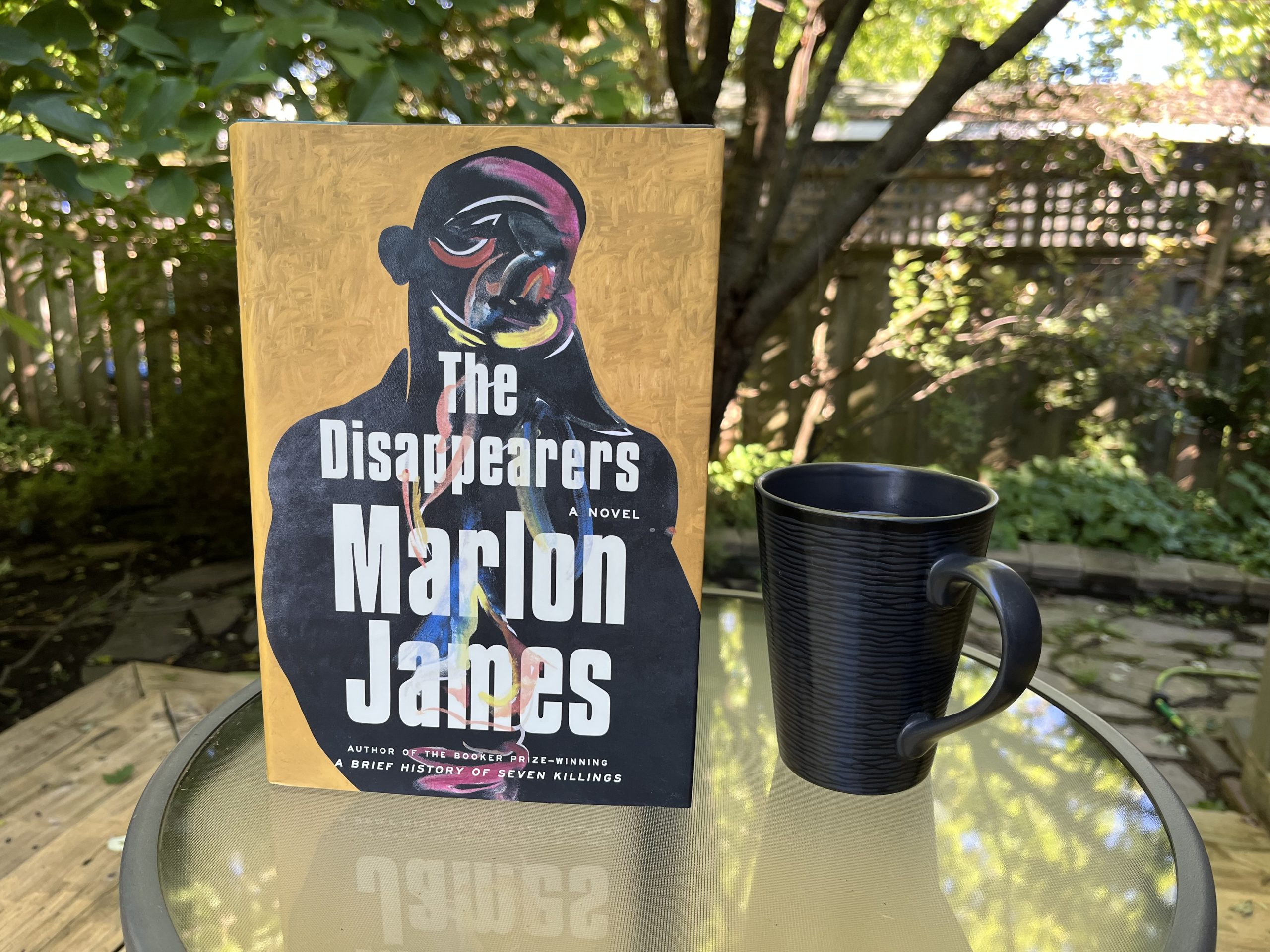
Some of this can be put down to Garner’s over-the-top praise, of the kind rarely encountered outside user reviews on Goodreads or Amazon. He says the novel “deserves to be talked about alongside Salman Rushdie’s Midnight’s Children, for its tumult of language and its crisscrossing post-colonial themes; Toni Morrison’s Song of Solomon (James picks up on a revenge scenario from that novel); and William Faulkner’s Absalom, Absalom! – the greatest American novel, I’d argue.” It is perhaps hyperbolic to imply that The Disappearers is this century’s Absolom, Absolom!, especially the day before it is even released to the public, and Garner goes on to write that “James is casually funny in a way Faulkner rarely is,” only proving that Garner hasn’t read Faulkner all that closely. (Faulkner could be very funny, but in a darker and more subversive way than James.)
Both American Scoundrel and The Disappearers are major works by high-profile writers; both were mainstays on those ubiquitous “most anticipated” lists of fall releases and both could be counted on to sell without the NYT‘s imprimatur. But that does not detract from the importance of the outlet’s coverage or the need for more of its kind. Not necessarily more breathless fawning of the kind Garner succumbs to, but more thoughtful, in-depth commentary on books and book culture.
It would be nice to see editors become a little more adventurous in what they assign, pushing the boundaries from surefire hits like Bird’s book and James’s to encompass work from small presses, debut writers, and those working in more specialized genres like short fiction or poetry. And it would be salutary if people talking about books might expand their horizons beyond the shiny newness of publishers’ frontlist to consider books from the past that remain worthy of attention.
In this respect, Garner’s review had a knock-on effect, drawing the attention of TikTok creator Remy Solomon, who pointed out Marlon and Jake Read Dead People, a podcast co-hosted by James and his editor, Jake Morrissey. The pair discuss classic works of literature under specific themes such as gratuitous violence, bad sex, and books that should be banned from school curricula. (They also have an episode dedicated to “writers we’ll never read again” that includes Faulkner, but they can be forgiven for that.)
These are, of course major outlets that already have an established reach; the NYT‘s book coverage is complemented by celebrity “book clubs” run by figures like Reese Witherspoon, Dua Lipa, and Jenna Bush. There are countless smaller podcasters, bloggers, festival organizers, and reading series already doing this work and frequently spotlighting the kind of books the larger, mainstream media tend to ignore. Maybe the NYT, and other media outlets like them, could take a page from these grassroots organizations also.